The Veil: Visible & Invisible Spaces
![]()
Confinement, looped film, Shakuntala Kulkarni
The Veil: Visible and Invisible Spaces is an exhibition of thirty-six works of art, each of which considers The Veil, its many manifestations and interpretations and puts veils and veiling into context.
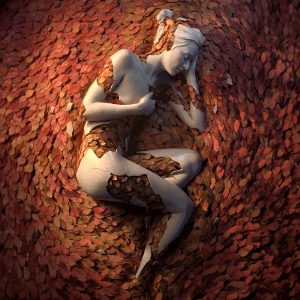
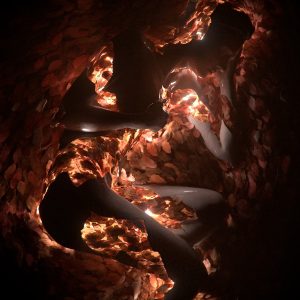
Visible and Invisible Spaces intends to engage received wisdom about the veil – particularly current clichés and stereotypes about Islamic practices – and to reflect on the great ubiquity, importance and profundity of the veil throughout human history and imagination. Visible and Invisible Spaces asks artists to investigate the veil in its broadest contexts. The exhibition will be divided into three categories to be interpreted widely: The Sacred Veil, The Sensuous Veil , and The Sociopolitical Veil. Visible and Invisible Spaces, however, is not a documentary exhibition.
Visible and Invisible Spaces is a visual companion to Jennifer Heath’s edited volume, The Veil: Women Writers on Its History, Lore, and Politics (University of California Press, forthcoming 2007). The exhibition, Visible and Invisible Spaces, invited visual artists – including videographers, filmmakers and new media artists, as well as painters, sculptors, performance and installation artists – from around the world to investigate and re-vision the veil.
These artists include: Sama Alshaibi, Tulu Bayar, Tiffany Besonen, Elizabeth Bisbing, Christine Breslin, Jo-Ann Brody, Fatma Charfi, Frances Charteris, Juliet Davis, Rebecca DiDomenico, Yassi Golshani, Ana Maria Hernando, Valari Jack, Tsehai Johnson, Tania Kamal-Eldin, Deb King, Mary Kite, Shakuntala Kulkarni, Anita Kunz, Judith Selby Lang, Victoria May, Aphrodite Desiree Navab, Brenda Oelbaum, Sara Rahbar, Sharmila Samant, Larissa Sansour, Asma Shikoh, Mary Tuma, Kerry Vander Meer, Arien Valizadeh, Eve Whittaker, Sherry Wiggins, Helen Zughaib.
In addition, Visible and Invisible Spaces features the 23-artist (Euroamerican and others) portfolio in book form, Re-Interpreting the Middle East, which grounds the show and acts as a kind of cultural ballast. The exhibit also includes an audience-interactive piece, “What Does the Veil Mean to You,” wherein viewers write responses on brightly colored silk headscarves that are displayed on laundry lines.
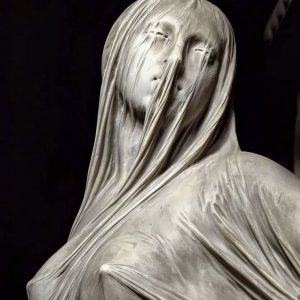
The veil is infinitely visual, yet it is also a means of concealment. The veil is itself mystery, even as it is the shroud that guards the mystery. Veiling is found everywhere and begins in Nature – such as eclipses and the periodic shedding of animals’ outer bodily layer (feathers, skin, fur or horn) before re-growth. As much as the veil is fabric or a garment, the veil is also a concept. Veils can be illusion, divination, vanity, artifice, architecture, clothing, hair, deception, curtains, magic, alchemy and transformation, dream, euphemism and metaphor, depression, hallucination, masquerade, beauty, eloquent silence, holiness, birth, liberation, imprisonment. Veils are the ethers beyond consciousness, the hidden hundredth name of god, the final passage into death, even the biblical apocalypse – the lifting of god’s veil to signal the “end times.”
To be veiled is, to some degree, to be unseen, the condition of both great attraction and repulsion. The artists featured in Visible and Invisible Spaces will speak to these myriad aspects of the veil and more.
Visible and Invisible Spaces begins traveling in 2008. The exhibition provides excellent opportunities for community and co-curricular activities.
Jennifer Heath
Curator/ Editor, The Veil: Women Writers on Its History, Lore, and Politics (University of California Press, forthcoming, 2008)